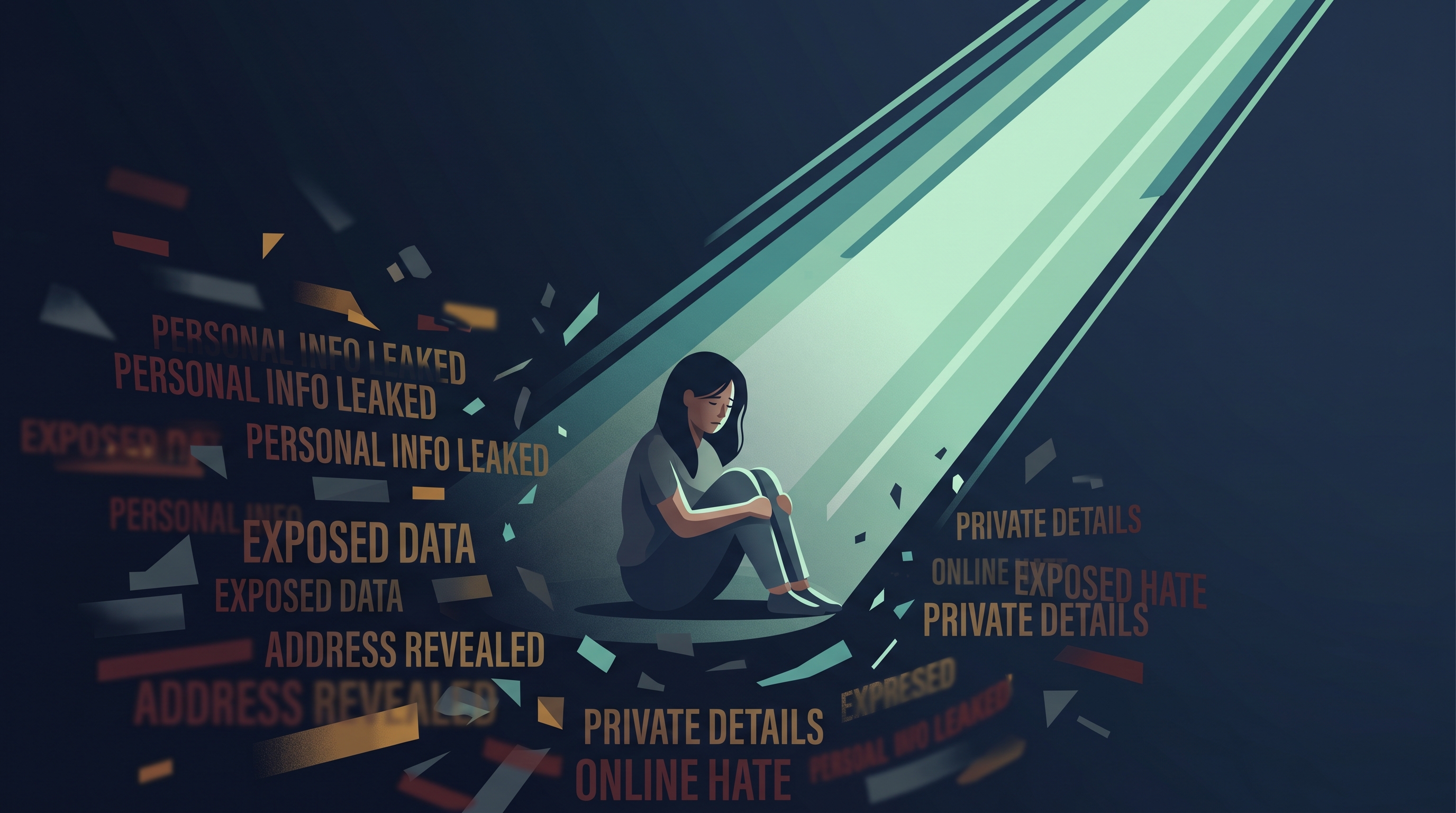
The Victims Are Real. The Damage Is Permanent.
In 2017, a disagreement between two players over a $1.50 Call of Duty bet escalated into a fatal swatting incident. One player recruited a serial harasser to send police to an address he believed belonged to his opponent. The address was wrong—it belonged to 28-year-old Andrew Finch, a father of two who had no involvement in the game. When he opened his front door to see why police had surrounded his home, he was fatally shot.
This wasn't a "prank." It was a coordinated attack that used digital anonymity to inflict physical death. Andrew Finch's family lives with the permanent damage of a digital dispute they didn't even know existed.
But it's not just gamers. Investigative journalists find their home addresses posted on forums. Tech workers are targeted with "doxxing" campaigns that leak their children's school locations. Survivors of domestic abuse are tracked across networks by former partners using "stalkerware" and IP tracking links. The victims are real, and for many, their homes no longer feel like a sanctuary.
This is the crisis of the modern internet
It's not about mean comments. It's about the weaponization of personal data. These aren't hypotheticals. These are people whose lives have been upended because a digital dispute made the leap to the physical world. The harasser relies on your data. Your safety depends on how well you can protect it.
How Your Data Becomes a Weapon
Harassers don't need elite skills to find you. They use three distinct attack patterns to bridge the gap between your screen and your front door. Understanding these patterns is the only way to build a defense.
1. Doxxing (The Data Leak)
Aggressors aggregate "breadcrumbs" from your social media—photos with recognizable backgrounds, mentions of your workplace, or location metadata (EXIF data) still attached to images. They combine this with information from "People Search" sites (data brokers) that sell your past addresses and phone numbers for pennies. Once they connect your username to your real name, your physical safety is compromised.
2. Swatting (The Emergency Hoax)
Once a harasser has your home address, they call emergency services claiming to be holding hostages at that location. They use VoIP services or spoofed numbers to hide their identity. The goal is to send an armed police response to your door. This is a high-stakes psychological attack that can, and has, resulted in death.
3. Network Stalking & IP Tracking
Harassers send seemingly innocent links in DMs or emails. When you click, the "tracking link" captures your IP address, revealing your city, your neighborhood, and your ISP. If you are on a home network, this is the final piece of the puzzle they need to confirm your location. For survivors of abuse, this is how they are found even after they move.
The Pattern: It Targets the Silenced
Harassment deepfakes and doxxing campaigns are disproportionately used against women, activists, and marginalized communities. The goal is to silence them through fear. By removing their sense of physical safety, the harasser regains control of the narrative. It is systematic, and it is effective.
Why Platforms Fail to Protect You
Platforms like X, Instagram, and Discord have policies against doxxing. But enforcement is catastrophically reactive.
A home address can be shared and screenshotted thousands of times before a platform moderator removes the post. By then, the "bell cannot be unrung." Platforms prioritize engagement and automated reporting over proactive protection. Most victims are left to file takedown requests while their phones are already blowing up with anonymous threats. The platforms know this is happening, but stopping it requires human intervention—and human intervention is expensive.
The 5 Pillars of Digital Defense
1. Sever the Link: Mask Your Connection
Every click leaves a trail. If a harasser is tracking you, your IP address is your biggest vulnerability. A VPN encrypts your connection and replaces your real IP with one from a remote server. This ensures that even if you click a malicious tracking link, the harasser only sees a data center, not your home network. We built Free VPN US knowing that for some, this isn't a "feature"—it's a safety requirement. Protect your location. Sever the link. It's the only way to ensure your browsing doesn't lead them to your door.
2. Scrub the Breadcrumbs: Audit Your Data
You must become your own private investigator. Search your name and aliases on sites like Whitepages, Spokeo, and MyLife. Request removals immediately—most sites have a mandatory opt-out process. Check your social media photos for recognizable landmarks and remove location metadata before you upload anything new.
3. Document and Record (Step-by-Step)
If you are being targeted, your instinct might be to delete the threats. **Don't.**
- Screenshot everything. Include the URL, the timestamp, and the perpetrator's profile. These are your evidence.
- Log the pattern. Record when threats escalate and how they are manifesting.
- Create an official record. File a non-emergency police report *before* a swatting attempt happens. Let them know you have been doxxed.
4. Lock Down the Perimeter
Set every social account to the highest privacy settings. Audit your followers and remove anyone you don't know personally. Change your profile pictures to something that doesn't reveal your face if the harassment is severe. Use "Friends Only" filters for everything—including old posts.
5. Build a Support Network
Harassment thrives in isolation. Reach out to organizations like the **Cyber Civil Rights Initiative** or the **Crisis Text Line**. These groups understand the specific trauma of digital harm and can provide legal templates and emotional support. You are not alone in this fight.
The Systemic Failure
We live in a world where data is abundant and consequences are minimal. Data brokers profit from your exposure. Platforms profit from the engagement fueled by outrage. Perpetrators hide behind the ease of technology and the slowness of the law. Until there are federal protections against doxxing and real-time detection for swatting calls, the burden of safety remains on the individual.
But you have agency. Every time you lock down an account, every time you mask your connection, every time you report a harasser—you are taking back a piece of the internet. Safety isn't given; it's claimed. Reclaim your digital space today.
Questions People Ask
What is the first thing I should do if I am being harassed online?
Immediately document everything. Take screenshots of messages, profiles, and timestamps before they can be deleted. Then, lock down your social media privacy settings and audit your footprint.
Can a VPN stop someone from harassing me?
A VPN doesn't stop messages, but it protects your location and IP address. This prevents harassers from using your digital trail to find your real-world address or network, severing the link between online persona and physical location.
When should I involve the police in online harassment?
Involve authorities immediately if there are physical threats, leaked personal addresses (doxxing), or if you suspect you are being targeted for swatting. Create an official record of the harm.
How do harassers find my personal information?
They use data brokers, public records, and 'breadcrumbs' from your social media—like photos with location metadata or mentions of your workplace. They aggregate small pieces of data to build a complete profile.
If You're Affected
If you are currently experiencing persistent harassment, use these resources to get immediate help and support.
Related Reading

Sever the Digital Link
Stop harassers from capturing your IP address and tracking your home network. One tap is all it takes to hide your location and take back control of your privacy.
- Mask your IP address
- Encrypt your connection
- Hide your location